
Japan travel alert · 5 August 2026 · 8 min read
Japan heat warning: what visitors should know today
A calm, practical guide to sightseeing safely during Japan’s intense August heat—without losing the best parts of your journey.Japan remains a rewarding summer destination, but the heat deserves the same respect as any other travel condition. Official heatstroke-alert records show warnings continuing through 5 August 2026, and Tokyo’s August weather is typically both hot and humid. This is a caution to adjust the shape of your day—not a reason to panic.
SHARE THIS TRAVEL UPDATE
Share this Tokyo Tours updateWhat today’s warning means
Japan’s Heatstroke Alert is issued jointly by the Japan Meteorological Agency and Ministry of the Environment when the forecast daily maximum Wet Bulb Globe Temperature (WBGT)—an index combining temperature, humidity, sunlight and wind—is expected to reach 33 or higher somewhere in the forecast area. Conditions can still be risky without an alert, so travellers should check the local WBGT and their own physical condition each morning.
How it may affect sightseeing
Outdoor sites remain accessible, but long exposed walks can become exhausting much earlier than expected. Stone approaches at shrines, castle grounds, theme-park queues and city viewpoints may have limited shade. Plan temples, gardens and walking districts early; move museums, shopping, teamLab, aquariums or a long lunch into the hottest hours; then return outside toward evening.
A heat-smart Tokyo day
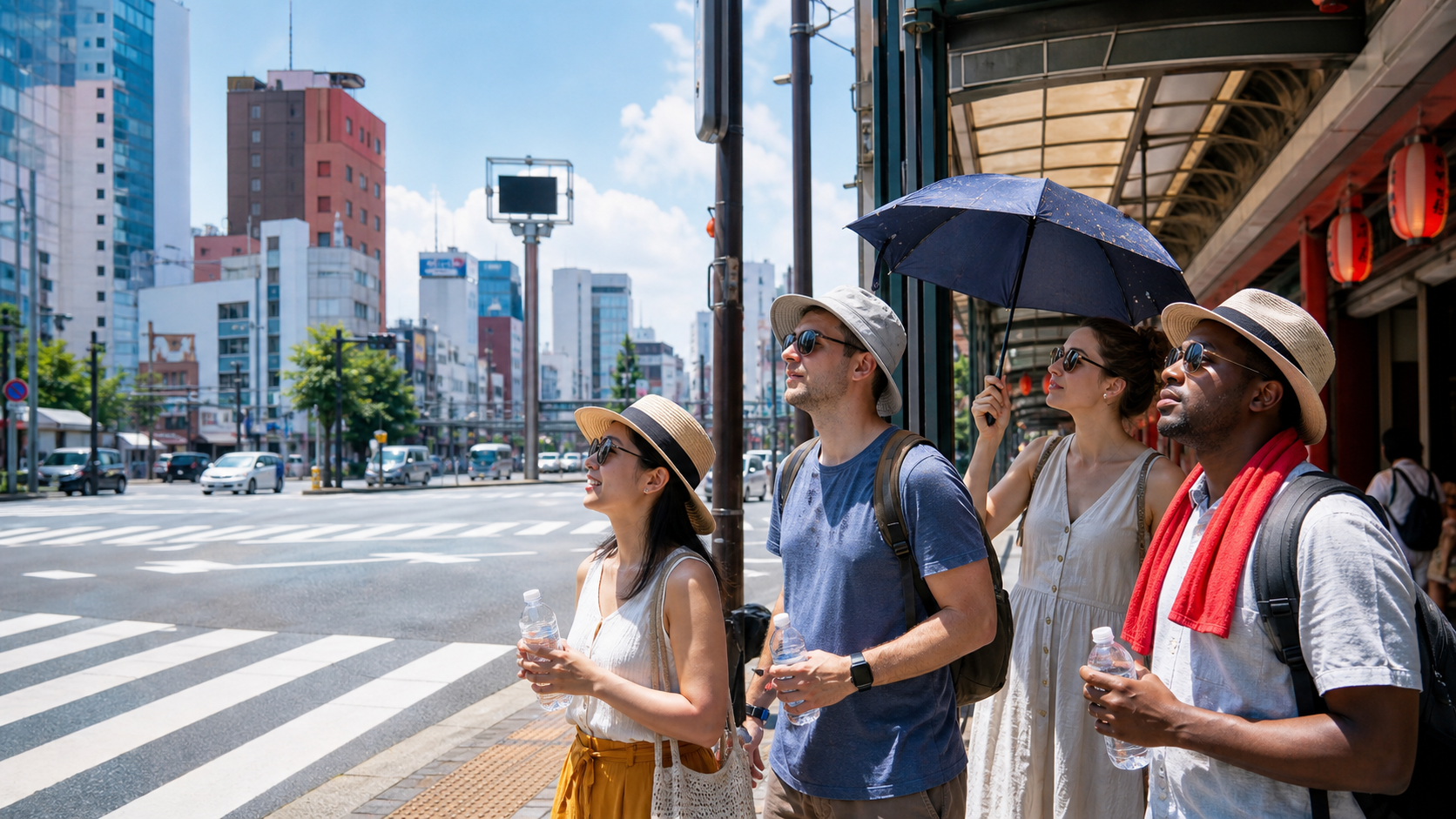
Start around 7:00–8:00, travel light and build an air-conditioned pause into every district. Carry water and an electrolyte drink, use a hat or parasol, choose breathable clothing and rest before you feel tired. Convenience stores, department stores, cafés and Tokyo cooling shelters can provide useful recovery stops. Families should check children often; older travellers and anyone unwell or not acclimatised need extra care.
Recognise symptoms early
Dizziness, headache, nausea, cramps, unusual tiredness, heavy sweating or difficulty concentrating can indicate heat illness. Stop the itinerary immediately: move to air conditioning or shade, loosen clothing, cool the neck, armpits and groin, and take fluids with electrolytes if the person is fully conscious and able to drink. Do not leave the person alone.
When to seek urgent help
Call an ambulance on 119 if the person is not responding normally, is unconscious or cannot drink independently. The Japan Visitor Hotline (050-3816-2787; +81-50-3816-2787 from overseas) operates 24 hours in English, Chinese and Korean for illness, accidents, emergencies and travel assistance. This article offers general travel guidance and does not replace medical advice.
Tokyo Tours planning note
Our private itineraries can reverse stop order, shorten exposed walks, add vehicle transfers and move outdoor highlights into cooler windows. Guests should tell us about children, older family members, mobility needs or medical advice before departure so the day can be paced appropriately. We monitor official guidance, but conditions can change quickly—always follow current local instructions.
OFFICIAL INFORMATION SOURCES
- Japan heatstroke-alert status and history ↗
- JMA: Heatstroke Alert explained ↗
- Ministry of the Environment: first aid for heat illness ↗
- JNTO Japan Visitor Hotline ↗
© 2026 Tokyo Tours & Travels. Original editorial content and image. All rights reserved. Sharing this page is welcome; republication requires written permission.
Would you like this experience shaped around your dates and pace?
Plan this into my journey ↗